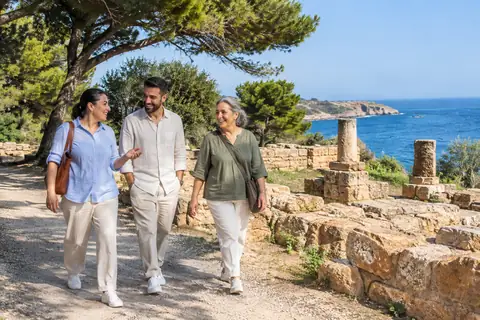
In Algeria, first minute travel for 2027-2028 means reserving flights, hotels and excursions many months ahead, usually before the busy summer and winter periods fill up. The country is the largest in Africa, with a Mediterranean coast, Roman sites, mountain regions and a vast stretch of the Sahara. Most visitors need a visa arranged before departure, and domestic flights to southern towns sell quickly. Early reservation gives time to complete paperwork, compare operators and secure rooms in Algiers, Oran, Constantine and desert camps at more predictable rates.
Why planning early suits a destination like Algeria
Algeria is not a mass-market destination, and the choice of reliable tour operators, flights and hotels is smaller than in neighbouring countries. This makes advance planning more important than elsewhere. Internal flights to Djanet, Tamanrasset or Timimoun operate on limited schedules, desert camps have a restricted number of beds, and guided tours depart on fixed dates. Securing these elements early avoids disappointment and allows the rest of the journey to be built around them.
Early booking also helps with the formalities. Visa processing, supporting documents and hotel confirmations all take time, and the exact steps depend on nationality and the consulate that handles the file. Travellers who start several months ahead have room to correct errors without rushing. Prices for flights are also usually lower when purchased early, particularly outside the summer weeks when relatives living abroad fill the aircraft to coastal cities.
Seasons, climate and the right months
The north enjoys a Mediterranean climate, with hot dry summers and mild, sometimes rainy winters. Beaches near Tipasa, Bejaia, Jijel and Oran are at their best from June to September, though this is also the period of highest fares and fullest hotels. Spring and autumn suit city visits and archaeological sites such as Timgad, Djémila and Tipasa, with comfortable temperatures for walking among the ruins and exploring the Casbah of Algiers.
The Sahara is best from October to April, when daytime temperatures are bearable and nights are cool. Summer heat in the south can be extreme, and many camps and tour companies close or reduce activity. The high plateaus and Kabylie mountains can be cold, with snow in winter. Ramadan changes opening hours and the pace of daily life, so visitors who prefer a lively evening atmosphere should check the calendar before fixing dates.
Visa, entry rules and documents
Most nationalities require a visa to enter Algeria, and the process involves an application to an Algerian embassy or consulate, often with a valid passport, photographs, proof of accommodation and a return ticket. Tourist visas are frequently linked to a confirmed itinerary or invitation, and processing times vary. Applicants should rely only on official consular information and check current requirements shortly before submitting anything, because rules and platforms change.
Passports normally need to be valid for several months beyond the planned stay, and import rules limit the amount of local currency that can be taken in or out. Official government travel advice should be read before booking, especially for the far south and border regions, where some areas are subject to restrictions and require a licensed local guide or permit. Travel insurance that explicitly covers Algeria, including medical evacuation, is a sensible precaution.
Flights and getting around the country
Algiers Houari Boumediene is the main international airport, with services from London, Paris, Istanbul and other hubs on Air Algérie, Turkish Airlines and several European carriers. Oran, Constantine and Annaba also receive international flights. Fares peak in July and August and around religious holidays, so early purchase is particularly useful. Baggage rules differ between airlines, and checking allowances for the return leg is advisable.
Within the country, Air Algérie and Tassili Airlines connect major cities and the south, while trains run along the northern corridor between Algiers, Oran and Constantine and are an inexpensive way to see the coast. Long-distance buses and shared taxis are widely used by locals, but visitors often prefer private transfers with a driver for comfort and security. Driving yourself is possible in the north, though road conditions and traffic in cities require patience.
Hotels, guesthouses and desert camps
Accommodation spans international-style hotels in Algiers and Oran, mid-range properties in provincial cities, family guesthouses and traditional houses in the M'zab Valley. The standard of service varies, so reading recent traveller reviews and confirming facilities such as air conditioning, hot water and Wi-Fi is worthwhile. Rooms in the capital can be expensive relative to quality, which is another reason to reserve ahead and compare locations.
In the south, camps near Djanet, Timimoun and the Hoggar offer basic tents or simple huts, usually included in organised tours. Cold nights and limited electricity are normal, so warm clothing, a torch and a power bank are useful. Beach resorts along the coast are largely domestic in character and fill with Algerian families in summer; reserving early for a seaside stay in July or August is almost essential.
Places and experiences that shape a trip
Algiers combines French colonial boulevards, the hillside Casbah, museums and the Notre-Dame d'Afrique basilica. East of the capital, Constantine is built across a dramatic gorge and linked by bridges, while Tipasa and Djémila offer UNESCO-listed Roman remains within reach of the coast. Ghardaïa and the M'zab Valley present a distinctive architecture of fortified towns, and Oran is known for its music, seafront and Spanish-influenced heritage.
The Sahara draws many visitors to Tassili n'Ajjer, a plateau of sandstone formations and prehistoric rock paintings, accessed from Djanet. Hiking, camel treks and four-wheel-drive journeys must be arranged with licensed local agencies, which provide guides and permits. Anyone interested in photography, archaeology or quiet landscapes will find a very different experience from beach destinations, with long distances between stops and a slower rhythm.
Budget, money and sensible precautions
Costs depend on the style of travel. Flights and the visa process are usually the main upfront expenses, while on the ground meals, local transport and street food are inexpensive compared with Europe. Hotels in the capital and guided Sahara programmes cost more. The local currency is the dinar, and cash is dominant, with card acceptance limited outside larger hotels, so travellers should plan how to obtain money in advance.
Standard precautions apply: avoiding unofficial currency exchange, keeping copies of documents, and following local guidance on photography near government buildings and military sites. Dress is generally modest, particularly in rural areas, and respectful behaviour is appreciated. Insurance with adequate medical and cancellation cover, together with flexible reservation conditions, offers some protection against changes that are outside the traveller's control.
Conditions, deposits and changes
Operators that organise Algerian programmes often ask for a deposit at confirmation and the balance several weeks before departure, with cancellation charges that rise as the date approaches. Because visa decisions are outside the traveller's control, it is wise to ask what happens if an application is refused: some companies refund most of the amount, others keep part of it for permits already purchased. These points should be agreed in writing before any payment.
Flights deserve the same attention. Fares marked as non-refundable are cheapest but give little room if a visa is delayed, while semi-flexible tickets allow one date change for a fee. Booking transport only after the visa is granted lowers the risk but may cost more, so some travellers choose a middle path: reserve the ground programme and a changeable ticket first, then confirm the rest once documents are in hand.
Companies that sell first minute travel to Algeria
- Air Algérie — National airline serving Algiers and domestic routes to the south.
- Tassili Airlines — Algerian carrier with internal flights to Saharan destinations.
- Turkish Airlines — Flights to Algiers and other cities via Istanbul.
- Air France — Services between Paris and several Algerian airports.
- Wild Frontiers — Adventure operator running guided journeys in Algeria and the Sahara.
- Untamed Borders — Specialist offering small-group and tailor-made trips to Algeria.
- Lupine Travel — Operator offering tours and city stays in North Africa.
- Booking.com — Platform with hotels and apartments in Algerian cities.
Guided programmes in Algeria, including Saharan itineraries, are described on the operator's own pages. Wild Frontiers