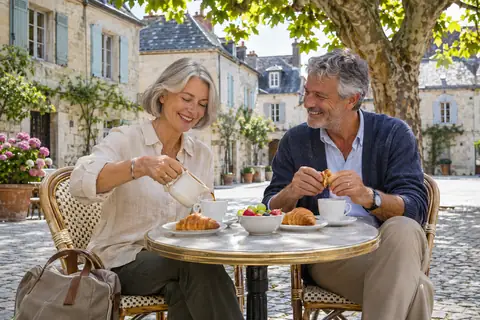
In France, first minute travel for 2027-2028 means booking holidays many months ahead, often from the autumn before the summer season. Early reservations improve the choice of gîtes, campsites, coastal apartments and hotels in Brittany, the Dordogne, Provence and the Riviera, where school-holiday weeks fill quickly. Visitors from Britain can arrive by Eurostar, ferry, the Channel Tunnel or direct flights to Paris, Nice, Lyon and Bordeaux. Spring and autumn suit city breaks and wine regions, while the Alps and Pyrenees attract winter skiers, and early offers frequently include flexible changes.
Why France rewards early planning
France is the most visited country in the world, and demand is strong from British, German, Dutch and domestic travellers alike. Peak weeks in July and August, along with the bank holidays of May, bring high occupancy in popular coastal and rural areas, and the best properties go first.
French families take their main holiday in summer, which means that gîtes, campsites and seaside apartments are heavily booked in the same weeks that British school holidays begin. Reserving early gives access to the widest choice at the best prices, while late bookers must accept what remains.
Cities and festivals add another layer. Paris is busy at fashion weeks and trade fairs, Cannes is crowded in May, and Avignon fills for its summer theatre festival. Checking the calendar before choosing dates avoids paying inflated rates for a hotel room.
Regions and the best time to visit
Paris and the Loire Valley suit culture, châteaux and food, and are enjoyable from April to October. Normandy and Brittany offer coastal walks, seafood and a cooler climate, which many visitors find more comfortable than the heat of the south in high summer.
The Dordogne, Provence and Languedoc combine villages, markets and vineyards. Summer is hot but lively, while May, June and September offer pleasant temperatures and quieter roads. The Riviera and Corsica are beautiful in early summer and early autumn, with warm sea water and fewer crowds.
The Alps and the Pyrenees offer skiing from December to April and hiking in summer. Alsace and the Christmas markets draw visitors in winter, and Burgundy, Champagne and Bordeaux are at their best around the autumn grape harvest.
Corsica, reached by ferry from Marseille, Nice or Toulon or by flight, deserves a place on the list. Its mountains, coves and walking paths attract hikers and beach lovers, and ferry cabins for the summer weeks are reserved well in advance by those who plan their route early.
Getting to France and travelling within it
From Britain, Eurostar links London with Paris in a little over two hours, and onward trains reach many regions. Booking tickets as soon as they open usually gives the best fares, and seats on busy summer days can sell out well in advance.
Drivers can use the Channel Tunnel or cross by ferry to Calais, Dunkirk, Dieppe, Caen, Cherbourg, Saint-Malo and Roscoff. Cabins and car spaces on night crossings and in school holidays are limited, so reserving early is wise, especially for longer routes to western France.
Direct flights serve Paris, Nice, Lyon, Bordeaux, Toulouse, Marseille and others. Within France the high-speed TGV network is fast, with discounted advance fares, while regional trains and buses cover smaller towns. A car is helpful in rural areas.
Accommodation for every kind of trip
Gîtes are self-catering country homes found throughout France, and they suit families and groups who prefer space and a kitchen. They are often let from Saturday to Saturday in summer, and the best ones, with a pool or a garden, are reserved many months ahead.
Campsites and holiday parks are an established French tradition, offering pitches, mobile homes and lodges with swimming pools and activities. Chambres d'hôtes, the French equivalent of bed and breakfast, give a more personal welcome and a taste of local life.
Hotels range from simple roadside stops to grand palaces. City hotels can be expensive and compact, so apartments may be better value for longer stays, while rural inns often offer half board that includes a good regional dinner.
Many hosts in rural France speak limited English, so a short message in simple French at booking is welcomed. Confirming the arrival time, the key collection and any extra charges, such as heating or tourist tax, avoids misunderstandings at the door.
Costs, deposits and protection
Prices vary widely. Paris, the Riviera and the main ski resorts are expensive, while rural regions such as the Auvergne, Limousin and parts of Brittany offer good value. Eating the lunchtime formule, a fixed-price menu, is an easy way to experience French cooking at a moderate cost.
Deposits for early bookings are normally a portion of the total, with the balance payable several weeks before arrival. Cancellation conditions differ between owners, operators and platforms, so noting the last date for a free change or refund is essential.
Package holidays from licensed operators come with financial protection in the United Kingdom. Travel insurance for medical expenses, cancellation and delays is recommended, and the UK Global Health Insurance Card gives access to state healthcare on the same terms as French residents.
Tolls on French motorways can add up on long journeys, and petrol stations on the motorway are dearer than those in towns. Planning the route and fuel stops in advance keeps the driving budget under control, as does choosing the quieter national roads for part of the way.
Formalities and local customs
British travellers should check passport validity and the latest entry rules for France, including any travel authorisation scheme for the Schengen Area and limits on the length of stay. These requirements can change, and official government sources should be consulted shortly before travel.
French customs are formal in small ways. A greeting of bonjour on entering a shop or a restaurant is expected, and meals are taken seriously, with lunch usually served between noon and two. Many small shops close at midday, and some towns have quiet Sundays.
Driving rules include speed limits that differ on motorways, roads and in towns, and drivers must carry a reflective jacket and a warning triangle. Low emission zones in several cities require a Crit'Air sticker, which should be ordered before departure.
Building a balanced holiday
Combining a city with a region works well. A few days in Paris followed by a week in the Loire, or a stay in Lyon before the Alps, gives variety and breaks up long journeys. A slower pace tends to be more rewarding than a long list of towns.
Food and wine are central to a French holiday. Visiting local markets, tasting regional cheeses and booking a vineyard tour add depth, and many producers welcome visitors by appointment, so early planning helps secure a place.
Allowing flexibility for weather is wise, as even summer can bring storms. A short list of indoor options, such as museums, caves, châteaux and covered markets, makes rainy days enjoyable and ensures that an early booking leads to a relaxed and memorable holiday.
Public holidays can alter plans. On bank holidays and in August, many businesses close, and booking restaurants and attractions in advance is wise, especially in smaller towns where capacity is limited and demand from visitors is high.
Companies that sell first minute holidays to France
- Eurostar — High-speed rail from London to Paris, with onward connections.
- Brittany Ferries — Ferry operator linking Britain with Normandy, Brittany and Spain.
- P&O Ferries — Ferry services between Dover and Calais.
- Eurotunnel Le Shuttle — Channel Tunnel vehicle shuttle between Folkestone and Calais.
- Eurocamp — Mobile homes and tents on campsites throughout France.
- Gîtes de France — Network of rural holiday homes and guest rooms.
- Sykes Holiday Cottages — Holiday cottages and villas, including properties in France.
- Club Med — All-inclusive resorts in French mountains and on the coast.
Ferry crossings and holiday packages to Normandy and Brittany can be reserved in advance with Brittany Ferries. Brittany Ferries