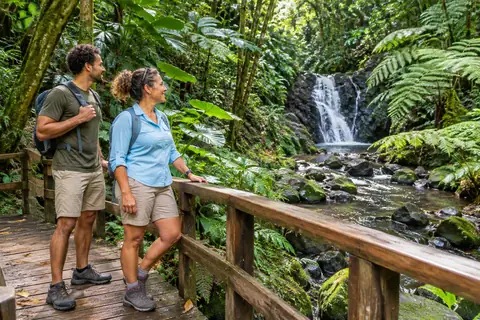
In France's Reunion Island, first minute travel for 2027-2028 means securing flights, accommodation and mountain gites many months before departure. The island is a French overseas department in the Indian Ocean, so the currency is the euro and French standards apply to hotels, car hire and healthcare. Flights from Europe take about eleven hours, usually from Paris, and seats become scarce in the school holidays. Early reservation matters most for hiking huts in the cirques, lagoon-side lodgings on the west coast and hire cars, which all run short in the southern winter high season.
Why booking ahead matters on a small volcanic island
Reunion is compact, and its accommodation stock is far smaller than that of a major beach destination. Boutique guesthouses, creole lodges and mountain gites hold only a handful of rooms each, and the best ones are often full many months ahead. Reserving at the opening of the season gives access to these places, as well as to flights at the more moderate end of the fare range.
The island is also popular with travellers from metropolitan France, who travel during their own school holidays. That demand pushes up fares and fills hire cars between July and August and again around Christmas. Anyone planning around those weeks should treat early reservation as essential rather than optional, and should compare several departure airports before committing to a date.
Package buyers should note that few mainstream British operators sell the island in a brochure, so independent flight and accommodation reservation is common. This gives freedom but also means checking each supplier's terms separately, including baggage, refund windows and how late a room can be released before the stay.
Flights from Europe and routes with connections
Direct services reach Roland Garros Airport near Saint-Denis from Paris, operated by French carriers including Air France, Air Austral, Corsair and the low-cost French bee, depending on the schedule. From Britain, most travellers connect in Paris or through Mauritius, a short hop across the sea that can be combined into a two-island trip.
Fares fluctuate sharply across the year, with the lowest usually found outside French school holidays. Baggage allowances differ between full-service and low-cost carriers, and heavy hiking equipment can change the real cost of the ticket. Reading the fare conditions on changes and refunds is especially useful on a long flight where a missed connection can cost an entire day.
Weather, seasons and the best time to go
The southern winter from May to October is dry and sunny on the west coast, with cooler nights in the highlands, making it the favourite window for walking. Between July and October, humpback whales visit the waters off the coast, and boat trips from the west attract many visitors. The summer from November to April is hotter and wetter, with a cyclone risk concentrated between January and March.
Weather varies enormously within a short distance. The west coast is sheltered and dry, the east catches the trade winds and heavy rain, and the interior can be misty or chilly even in sunshine on the coast. Packing layers and a rain jacket is sensible whatever the season, and checking the local weather service before any summit attempt is part of responsible planning.
Sunrise and sunset are early and quick, with daylight lasting roughly eleven to thirteen hours depending on the month. Planning long hikes with an early start protects against afternoon cloud, which often rolls into the cirques and hides the views.
Hiking, volcano and the cirques
The island's biggest draw is its interior. The three cirques of Cilaos, Salazie and Mafate are collapsed volcanic craters ringed by sharp ridges, and Mafate can only be reached on foot or by helicopter. The Piton de la Fournaise is one of the world's most active volcanoes, and its crater walks depend on the activity level announced by the local observatory.
Mountain gites along the long-distance trails need to be reserved in advance, particularly in the dry season, and meals are often arranged at the same time. A first minute reservation lets walkers sequence their nights and avoid the frustration of finding a refuge full. Good boots, a headlamp and enough water are basic, and guides can be hired for the more demanding routes.
Lagoons, beaches and safe swimming
The best beaches lie on the west coast around Saint-Gilles-les-Bains, L'Hermitage and Boucan Canot, where a coral reef shelters a shallow lagoon suited to snorkelling and paddling. Many beaches elsewhere on the island have strong currents and are not intended for swimming. After a series of shark incidents in past years, authorities have restricted open-water activities in certain areas.
Visitors should follow the posted signs, swim only in supervised or protected zones and ask the hotel or lifeguards about conditions. Anyone wishing to dive or surf can book with certified local operators who know the safe spots. Choosing lodging near the lagoon is a major advantage for beach-minded families, and those rooms tend to fill first.
Families may also appreciate the shallow, warm lagoon water for small children, and several beach restaurants provide shade and showers. Early booking of a ground-floor room near the sea saves carrying equipment up stairs after a day on the water.
Where to stay and how to move around
Accommodation ranges from international-style hotels near the coast to creole houses with a garden, cabins in the highlands and self-catering apartments. The west and southwest suit beach seekers, while Cilaos and Hell-Bourg attract hikers and those interested in the colonial architecture of the cirques. Many guesthouses offer breakfast and an evening table d'hote with local dishes.
Public transport exists, but a hire car is the practical way to cover distances, especially for sunrise starts at the volcano. Because the car fleet is limited, reserving it at the same time as the flight is wise. Roads in the interior are narrow and winding, so allowing generous driving times and avoiding night driving on mountain routes is recommended.
Scenic helicopter flights over the volcano and the cirques are a popular splurge and are best reserved in advance because places are limited and cancelled in bad weather. Local tourist offices in each village can also arrange guided walks, tastings of vanilla and rum, and visits to tea or sugar estates.
Food, culture and local costs
Creole cuisine blends African, Indian, Malagasy, Chinese and French influences. Dishes such as rougail saucisse, cari with rice and lentils, and samoussas are available from roadside stalls to restaurants. Fresh fruit is plentiful, with lychees in the early summer and pineapples from Victoria, and rum-based drinks are an island tradition.
Prices are generally closer to those of metropolitan France than to the rest of the region, and many imported goods carry a premium. Self-catering lets travellers shop at markets and supermarkets and trim the bill. Tipping is modest, cards are accepted nearly everywhere, and the euro makes budgeting simple for visitors from the eurozone, while others should watch exchange rates.
Seasonal markets in Saint-Paul and Saint-Pierre are excellent for picking up spices, vanilla pods and tropical fruit at modest prices, and they give an easy insight into daily island life. Arriving early in the morning gives the best choice and the coolest temperatures.
Cancellation, insurance and health cover
Flexible rates are worth seeking out, since mountain weather, volcanic alerts and cyclone warnings can disrupt plans at short notice. Many guesthouses and gites request a deposit and set their own cancellation windows, which are stricter in the high season. Keeping the written conditions together with the confirmation emails makes any later claim much simpler.
Comprehensive travel insurance should include medical expenses and repatriation, with specific cover for hiking at altitude and any activities such as canyoning. Visitors from Britain should confirm how their policy treats the island, while travellers with a European health card should check whether it is still valid for their situation. A mosquito-aware approach in the summer months is also advisable.
Companies that sell first minute travel to Reunion
- Air Austral — Reunion-based airline connecting the island with Paris and the Indian Ocean.
- Air France — Offers flights from Paris to the island and flight-plus-hotel packages.
- Corsair — Long-haul carrier operating between Paris and Reunion.
- French bee — Low-cost long-haul airline flying from Paris Orly to the island.
- Kuoni UK — Designs tailor-made Indian Ocean holidays, including multi-island itineraries.
- Audley Travel — Specialist planner of bespoke trips with local guides.
- Exodus Adventure Travels — Small-group walking and trekking holidays in the interior.
- Booking.com — Platform listing hotels, guesthouses and gites with flexible rates.
The island's home airline, Air Austral, sells flights and stopover options that link Reunion with Paris and the neighbouring islands. Air Austral