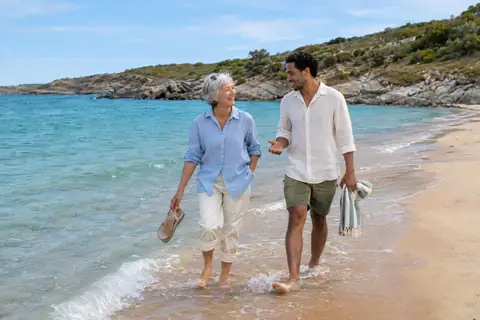
In Madagascar, first minute travel for 2027-2028 means booking a circuit, internal flights and island accommodation long before departure, because capacity is limited and the best lodges are small. The huge Indian Ocean island is famous for lemurs, baobab avenues, rainforest, tsingy rock forests and white beaches around Nosy Be and Sainte-Marie. Few airlines serve it directly from Europe, so seats on the main routes are scarce in the dry season. Early buyers secure guides, vehicles and rooms, and have time to prepare visas and vaccinations.
Why first minute booking matters in Madagascar
Madagascar is almost the size of France and Spain together, yet it has a modest number of hotels and lodges, and most of the ones close to the national parks have only a handful of rooms. In the dry season these small places fill quickly, and the choice narrows to whatever remains. Reserving at the opening of a season keeps the preferred itinerary intact.
Vehicles and guides are also finite. Long overland stretches require a four-by-four with an experienced driver, and good ones are committed months in advance to groups and tour operators. Asking early for a private vehicle, a naturalist guide or a photographic itinerary generally leads to a better result than looking for last-minute help on arrival.
Internal flights are the third bottleneck. Services to Nosy Be, Morondava or Tolagnaro operate on limited schedules, and cancellations or schedule changes occur. A package that includes domestic flights allows the operator to rebook the whole plan if timings move.
Group departures led by naturalists are announced a year or more ahead and generally have a fixed number of seats, which is another reason why early commitment is the practical way of securing a place on the sought-after dates.
Seasons, wildlife and the best periods
The dry season, roughly from May to October, is the most popular time for visiting the parks and the western baobab country. Roads are passable, days are sunny and nights can be cool on the high plateau. Whales migrate to the coast of Sainte-Marie between about July and September, when humpbacks come to breed and calve.
The wet season, from around December to March, brings heat, heavy rain and a cyclone risk on the east coast, and some roads become impassable. It is also the time of lush vegetation, many chameleons and baby lemurs, so naturalists sometimes choose it despite the difficulties.
Vanilla, cocoa and ylang-ylang harvests give rural trips an additional dimension, and visiting during them can be arranged in advance. The shoulder months of April and November often offer a pleasant balance of weather and lower prices.
Classic circuits to reserve early
The most celebrated overland route links Antananarivo with Andasibe-Mantadia, home to the indri lemur, and continues to the south through Antsirabe, Ranomafana and Isalo, with its sandstone canyons and natural pools. This circuit is usually completed in two weeks and is based on a driver and guide.
The west coast offers the Avenue of the Baobabs near Morondava, the Tsingy de Bemaraha reserve with its needle-sharp limestone and suspension bridges, and the Kirindy forest, where fossa and nocturnal lemurs may be seen. These regions need careful planning because lodges are scarce and tracks are long.
Northern options focus on Diego-Suarez, the Amber Mountain national park and the Ankarana reserve. Combining a short northern circuit with a beach stay is an efficient way to spend a week or ten days without long road journeys.
Visitors with only a week can concentrate on one region, for example the Andasibe rainforest followed by a few beach days, rather than attempting several long road stages that leave little time at each stop.
Beaches: Nosy Be, Sainte-Marie and the south
Nosy Be, off the north-west coast, is the main resort island, with warm water, snorkelling at Nosy Tanikely and boat trips to Nosy Iranja and its sandbar. Hotels range from simple bungalows to upscale resorts, and flights from Antananarivo or direct seasonal charters from Europe make it the easiest beach add-on.
Sainte-Marie, on the east coast, was a pirate haven and is now a quiet island of palm-lined beaches, a whale-watching season and a pirate cemetery. Ifaty and Anakao in the south-west are known for diving and kitesurfing, and the Mozambique Channel offers calm water in the dry months.
Swimming conditions vary by coast. The eastern Indian Ocean side has strong currents and sharks in places, so swimming is best in sheltered bays and at hotel beaches. Resorts can advise on the safest spots and on suitable times for snorkelling.
Flights, entry rules and health
Air France operates flights between Paris and Antananarivo, and other routes connect via Nairobi, Addis Ababa, Mauritius or Reunion. UK travellers usually route through one of those hubs, so booking the entire journey on a single ticket is advisable. Checked baggage limits on domestic flights are often low, and soft bags are easier to handle.
Most visitors need a visa, which can be obtained on arrival or online in advance, subject to the latest rules. Passports require sufficient validity and blank pages. Malaria precautions are advised for most of the island, and vaccination advice from a travel clinic should be sought weeks before departure.
Medical facilities outside the capital are limited, so insurance with evacuation cover is strongly recommended. Drinking only bottled or treated water and carrying a first-aid kit are standard measures for travellers on long circuits.
A stopover of a night in the capital after the long flight is a sensible habit, since it breaks the journey and allows luggage problems or domestic schedule changes to be resolved before the circuit begins.
Budget, tipping and daily comfort
Madagascar is rarely a low-cost destination for organised travel because of the distances, fuel costs and the need for guides and vehicles. Prices quoted by operators are usually per person based on two sharing, and park entrance fees may or may not be included, which is a point worth confirming in writing.
The Malagasy ariary is the local currency, and cash is needed in most areas, with card use limited to larger hotels. Tipping guides, drivers and lodge staff is customary and appreciated. Carrying small notes avoids difficulties on the road.
Comfort levels vary widely. Expect simple rooms with limited hot water in some lodges, and long days of driving. Light layers, sturdy walking shoes, a head torch and good insect protection are the essentials for parks and forest walks.
Conditions, insurance and pitfalls
Deposits are generally required at the time of booking, and the balance is due weeks before departure. Because local services rely on advance payment to guides and lodges, cancellation fees can be high for tailor-made itineraries. Understanding the schedule of charges before committing is vital.
Insurance should cover cancellation, health and repatriation, and the policy should specify any exclusions for remote areas. Keeping contact numbers for the local agent and the operator makes it easier to resolve problems if a flight or vehicle changes.
Typical mistakes include trying to see too much in ten days, underestimating road travel time, visiting the east coast in cyclone season and assuming that all beaches suit swimming. A realistic plan with two or three bases produces more time with wildlife and less time in a vehicle.
Specialists and airlines selling trips to Madagascar
- Air France — Operates flights from Paris to Antananarivo, with onward connections from the UK and Europe.
- Kuoni — Tailor-made Indian Ocean holidays including Madagascar circuits and Nosy Be stays.
- Audley Travel — Specialist in private Madagascar itineraries with wildlife and beach combinations.
- Wild Frontiers — Small-group and private adventure journeys, including Madagascar wildlife trips.
- Trailfinders — Long-haul specialist arranging multi-stop flights and tailored tours.
- Ethiopian Airlines — Connects many European cities with Antananarivo through Addis Ababa.
- Expedia — Booking platform for flights and hotels in Antananarivo and Nosy Be.
- Booking.com — Platform with lodges, hotels and beach bungalows on the main tourist routes.
A specialist planner sets out private Madagascar journeys with guides, domestic flights and lodges arranged in advance. Audley Travel